
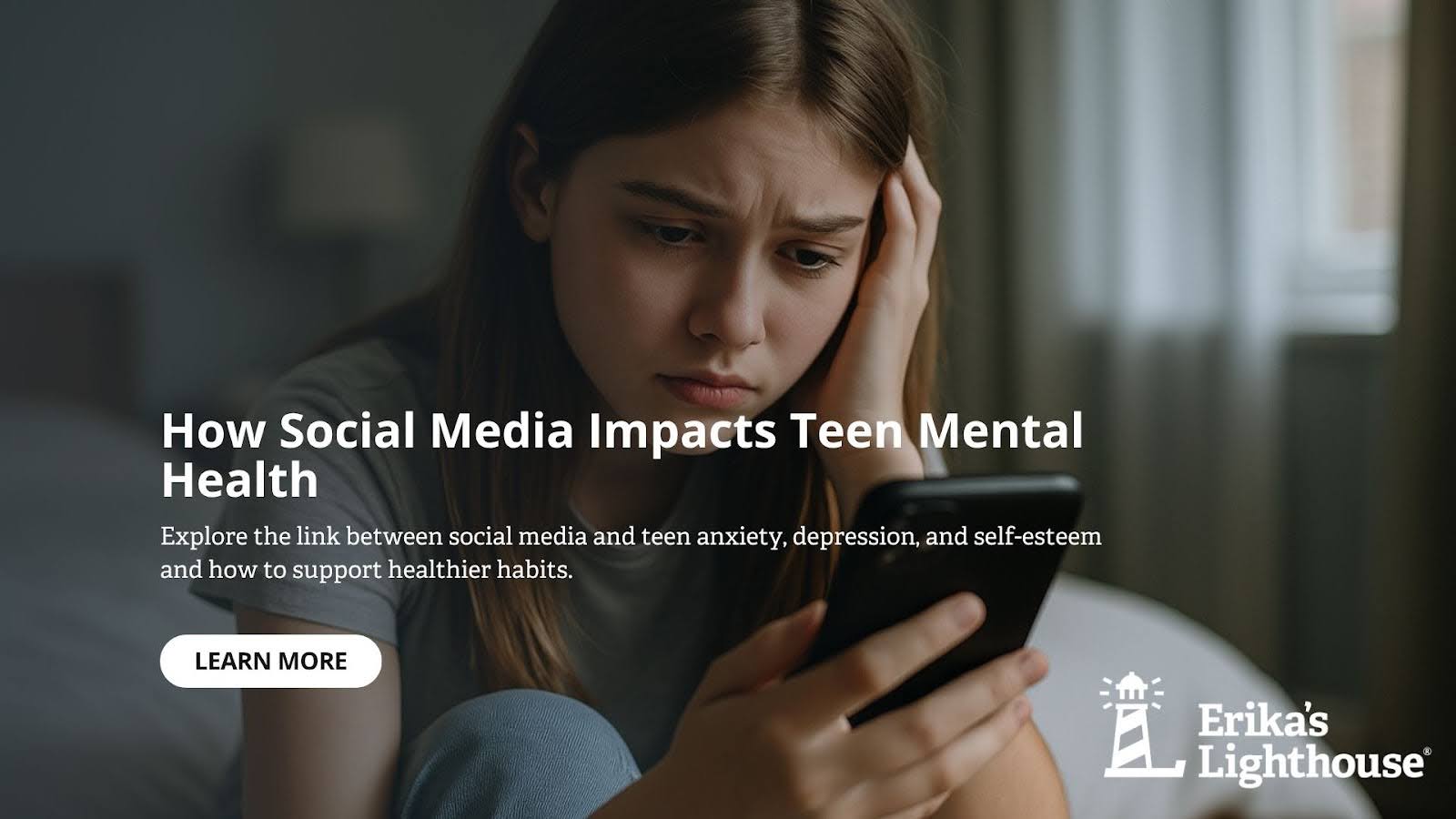
How Social Media Impacts Teen Mental Health
In today’s digital age, social media is a central part of daily life for teenagers. Platforms like Instagram, TikTok, Snapchat, and X (formerly Twitter) offer vital spaces for creativity, connection, and self-expression. While these networks help teens stay informed, heavy or unhealthy use can have serious consequences for a student's mental well-being.
At Erika’s Lighthouse, we believe every student deserves good mental health. Understanding the digital landscape is essential to ensuring no young person feels alone in their depression.
Social Media’s Role in Teen Life
For most teenagers, social media is more than a pastime; it is a primary way they communicate and understand the world. According to a 2023 Pew Research Center study, 95% of teens use YouTube, 67% use TikTok, and nearly 60% use Instagram.
However, when used excessively or without healthy boundaries, these platforms can contribute to anxiety, depression, and distorted self-perception.
The Negative Impacts of Social Media
-
- Comparison and Low Self-Esteem: Teens are at a developmental stage where identity and self-worth are still forming. Exposure to curated images can lead to feelings of inadequacy.
- Cyberbullying and Online Harassment: Unlike traditional bullying, cyberbullying can occur 24/7. Teens who experience online harassment are twice as likely to develop depressive symptoms.
- Sleep Deprivation: Scrolling late at night interferes with melatonin production. Poor sleep can amplify symptoms of anxiety and irritability.
- Addiction and Attention Issues: Notifications and endless scrolling activate dopamine pathways in the brain similar to gambling, leading to compulsive checking behaviors and shorter attention spans.
- Fear of Missing Out (FOMO): The constant need to stay updated can create emotional exhaustion and an unhealthy dependency on digital validation.
Signs a Teen May Be Struggling
Parents, teachers, and peers should watch for these red flags if they persist for more than two weeks:
-
- Withdrawal from family or friends.
- Sudden drop in grades or school participation.
- Obsession with online followers, likes, or appearance.
- Increased irritability, sadness, or fatigue.
- Avoidance of offline activities they once enjoyed.
Tips for Healthier Social Media Habits
-
- Set Boundaries: Encourage “screen-free zones” during meals or an hour before bedtime.
- Curate a Positive Feed: Empower teens to unfollow accounts that trigger negative emotions.
- Practice Digital Detoxes: Take regular breaks to reconnect with offline life and encourage good mental health practices.
- Use the Teen Toolbox: Encourage students to explore our Teen Toolbox, a self-guided mental health resource that covers stress, anxiety, and depression.
How Erika’s Lighthouse Can Help
Social media is a tool that reflects how we use it. Through our Four Pillar Model, we provide free, tier-1 resources to help communities navigate these challenges:
-
- Classroom Education: Our evidence-based lessons for grades 4-12 normalize mental health conversations and teach essential coping skills.
- Family Engagement: Our Family Workbook Series and Family Workshops help parents become "trusted adults" who can guide teens through digital stress.
- Empowerment Clubs: Student-led clubs promote positivity and peer-to-peer connection, providing a healthy offline community.
- Policy & Staff Training: We equip educators to build inclusive school cultures where students feel safe seeking help.
FAQs
Frequently Asked Questions
Q: How much social media use is considered "too much" for a teenager?
A: While there is no universal "magic number," research suggests that limiting use to less than 2 hours a day and not to exceed 3 hours, can lead to significant decreases in depression and loneliness. The focus should be on the quality of the time spent and ensuring it does not interfere with sleep or offline relationships.
Q: What is a "trusted adult," and why is it important for online safety?
A: A trusted adult is someone a teen feels comfortable speaking to about their concerns. Erika's Lighthouse programs help students identify these individuals—such as teachers, coaches, or family members—so they have support when facing digital challenges like cyberbullying.
Q: Are there free tools to help my teen manage digital stress?
A: Yes! Our Teen Toolbox is a free, self-guided resource that covers topics like stress and anxiety. Additionally, the Mental Health Recharge offers 5-minute classroom breaks designed to boost mental health and teach positive coping mechanisms.