
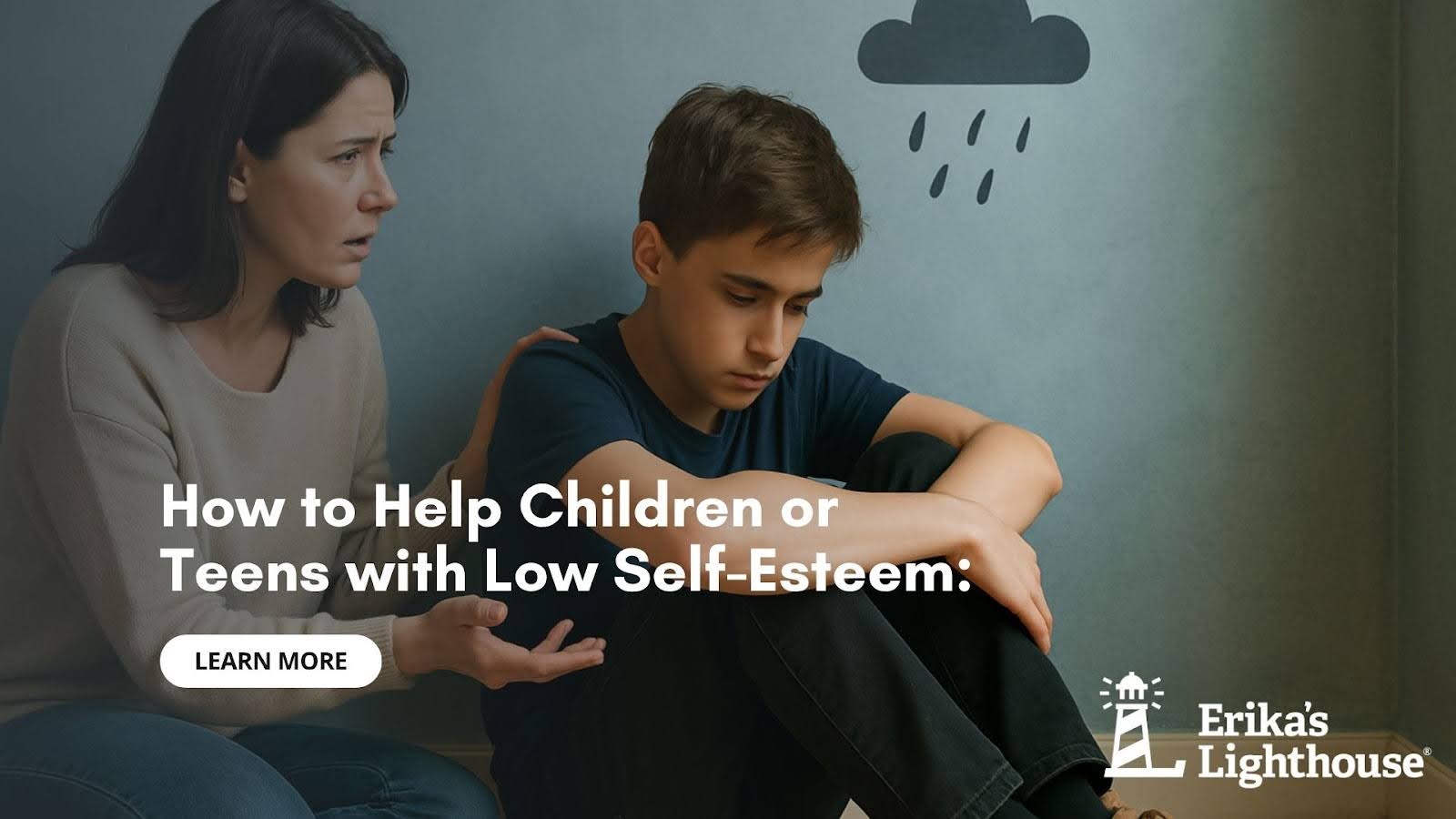
How to Help Children or Teens with Low Self-Esteem: Strategies That Work
Takeaways
Key Takeaways
-
Effort Over Perfection: Praise persistence and courage rather than just the final result to help children build a stable sense of worth.
-
The Power of Modeling: Children mirror the adults in their lives; practicing positive self-talk yourself is one of the best ways to teach it to them.
Peer Connection Matters: Involvement in inclusive groups, like Empowerment Clubs, helps teens find a sense of belonging that bolsters self-confidence.
Self-esteem plays a crucial role in a young person’s emotional, social, and academic development. When children or teens struggle with low self-esteem, they may experience feelings of inadequacy, withdrawal from friends and family, or even symptoms of anxiety and depression.
For parents, caregivers, and educators, understanding how to nurture confidence and resilience can make a life-changing difference. At Erika’s Lighthouse, we believe that providing students with the right tools early on is the best way to ensure every young person knows how to take care of their mental health.
Understanding Low Self-Esteem in Youth
Low self-esteem is more than just a temporary lack of confidence; it is a deep-seated belief that one is not “good enough.” This mindset can form early and persist into adolescence if not addressed.
Common causes include:
-
- Negative Self-Comparisons: Especially on social media, where perception is skewed.
- Unrealistic Expectations: Harsh feedback or pressure to be perfect can erode confidence.
- Social Exclusion: Bullying or rejection deeply affects a child’s sense of belonging.
- Academic Struggles: Constant difficulty in school may create a "failure" identity.
Signs a Child or Teen is Struggling
Look for these behaviors as indicators that a young person may need extra support:
-
- Frequent self-criticism (“I’m dumb,” “I can’t do anything right”).
- Avoiding new challenges or quitting easily to avoid failure.
- Difficulty accepting compliments or positive feedback.
- Withdrawal from favorite activities or social circles.
Effective Strategies to Build Confidence
-
- Encourage Effort: Statements like “You worked really hard on this and put in so much effort” reinforce worth rooted in persistence.
- Model Healthy Self-Talk: Reframe your own mistakes out loud: “I messed up, but I can learn from this.”
- Teach Emotional Awareness: Help kids name their feelings to reduce the shame often associated with vulnerability.
- Limit Social Media Pressure: Help teens understand that their worth isn’t measured by "likes."
- Utilize the Teen Toolbox: Encourage teens to explore our Teen Toolbox, a self-guided resource filled with activities to help them manage stress and build resilience.
How Erika’s Lighthouse Supports Self-Worth
We provide a Four Pillar Model that allows schools and families to surround students with support:
-
- Classroom Education: Our lessons teach students that mental health is just as important as physical health, reducing the stigma that sounds mental health issues.
- Empowerment Clubs: These student-led clubs allow teens to take charge of mental health awareness, giving them a sense of purpose and leadership.
- Schoolwide Campaigns: Resources like the Positivity Pledge encourage students to spread kindness and build a supportive school culture.
- Family Engagement: We offer workshops and handbooks to help parents become "trusted adults" who can effectively guide their children through emotional challenges.
By focusing on "upstream" prevention, we help create an environment where every young person feels seen, supported, and empowered.