
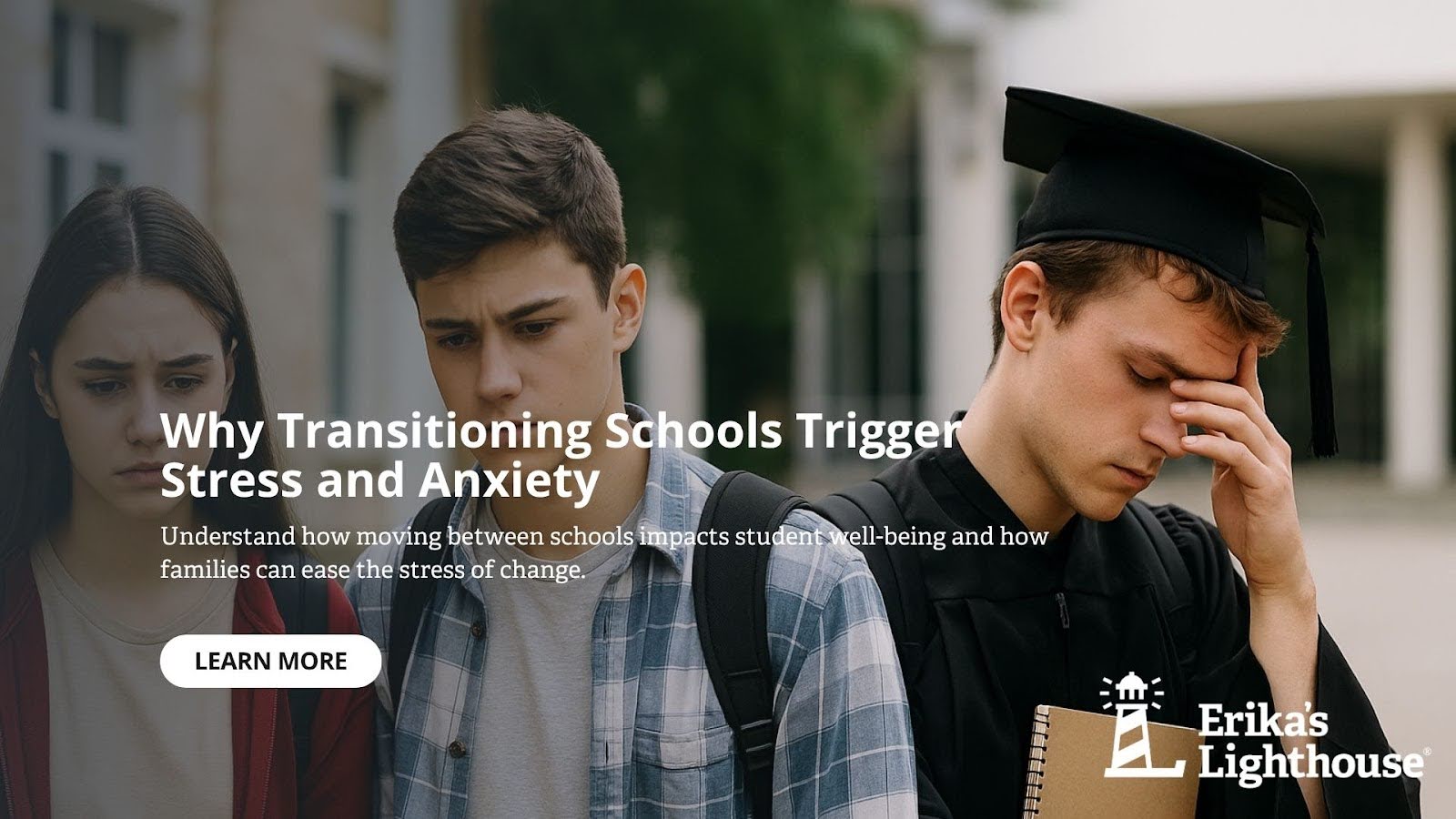
Why Transitioning Schools Can Cause Stress and Anxiety in Students
Takeaways
Key Takeaways
-
Predictability is Safety: Changes in routine, even positive ones, disrupt the brain's sense of security and can lead to heightened stress.
-
Common Stressors: Academic pressure, shifting social hierarchies, and newfound independence are primary triggers for transitional anxiety.
-
Support Matters: Normalizing the struggle and providing "upstream" mental health education can prevent these stressors from escalating into a crisis.
Academic transitions are a natural part of life, but moving from one stage to another can feel like stepping into an entirely new world. Whether it’s the shift from middle school to high school or high school to college, these changes bring excitement and freedom—but they also frequently trigger significant stress, anxiety, and overwhelming emotions.
Recognizing the emotional impact of these transitions is the first step toward ensuring students and families have the support they need to thrive.
The Psychology Behind Transitional Stress
The human brain thrives on routine and predictability to feel safe. Any major change disrupts this sense of security. When students transition to a new school environment, they often face:
-
- Uncertainty: New expectations, teachers, and peers can make even confident students feel unsure.
- Loss of Familiarity: Leaving behind known support systems can feel like losing a piece of one's identity.
- Increased Responsibility: The academic workload and future planning suddenly feel much heavier.
For adolescents, whose brains are still developing emotional regulation skills, the amygdala (the brain’s “alarm system”) can become hyper-reactive. Without strong coping tools, this shift feels overwhelming.
Common Stressors: Middle School to High School
The move to high school coincides with puberty and identity exploration. Key sources of stress include:
-
- Academic Pressure: Harder coursework and the pressure of college pathways.
- Social Dynamics: Shifting hierarchies and the risk of exclusion.
- Self-Image: Heightened sensitivity to social comparison.
- Time Management: The difficulty of balancing homework, clubs, and a social life.
The Unique Challenges of the College Transition
Many students experience "transition shock" when moving to college. The novelty quickly fades, replaced by:
-
- Separation Anxiety: Living away from family for the first time.
- Financial Pressure: Managing tuition, housing, and food costs.
- Unstructured Freedom: Stress caused by the sudden need for total self-regulation.
Warning Signs of Stress and Anxiety
Parents and educators should watch for red flags that persist for more than two weeks:
-
- Sudden withdrawal from friends or family.
- Changes in appetite or sleep patterns.
- Physical complaints (headaches, stomachaches) with no clear cause.
- Decline in academic performance.
- Irritability or hopelessness.
How Erika’s Lighthouse Supports Healthy Transitions
At Erika’s Lighthouse, we believe every student deserves good mental health. We provide a full suite of free, universal, tier-1 resources to help schools create a culture of support during these pivotal moments.
Our Four Pillar Model ensures that no student feels alone:
-
- Classroom Education: We provide evidence-based lessons for grades 4-12 that normalize mental health conversations and teach essential coping skills.
- Empowerment Clubs: Our student-led clubs promote positivity and peer-to-peer connection, reducing the isolation often felt during transitions.
- Family Engagement: We offer workbooks and workshops to help parents become "trusted adults" who can identify signs of distress.
- Policy & Staff Training: We equip educators with the tools to build inclusive school cultures where students feel safe seeking help.
By implementing these "upstream" strategies, we can turn a stressful transition into an opportunity for growth and resilience.
FAQs
Frequently Asked Questions about School Transitions
Q: Why does my child seem more irritable since starting high school?
A: Irritability is a common sign of transitional stress. High school brings increased academic pressure and shifting social dynamics, which can overwhelm an adolescent’s developing brain. Using tools like the Mental Health Recharge can help students manage these daily stressors.
Q: How can I help my student prepare for the emotional shift of college?
A: Open communication is key. Families can use resources like our Family Workbook Series to build a shared vocabulary around mental health before the transition happens, ensuring the student knows how and when to ask for help.
Q: What should a school do to support students during academic milestones?
A: Schools can implement a Culture Framework that prioritizes mental wellness. This includes training all staff to be "trusted adults" and providing student-led Empowerment Clubs to foster a sense of belonging and reduce stigma